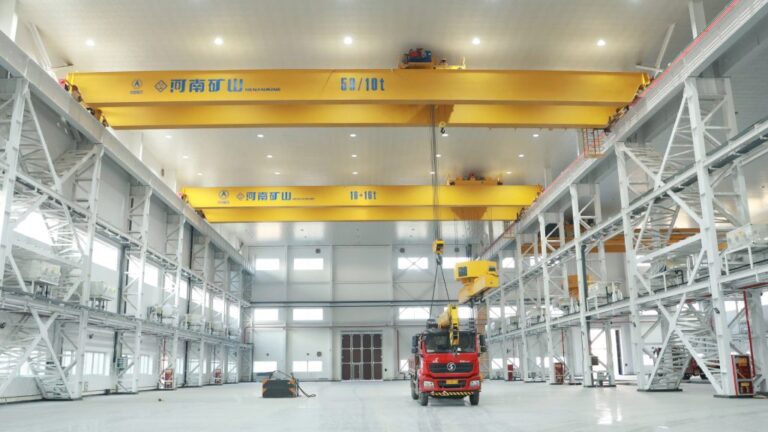
Single-Girder vs Double-Girder Overhead Crane: A Buyer's Decision Guide
A single-girder crane is usually the economical choice when it can meet the required load, span, hook height, duty and service-access conditions. A double-girder crane becomes the stronger investment when the process requires greater structural capability, higher hook position, demanding duty, special trolley arrangements, maintenance platforms or future automation. The correct decision comes from the complete application—not capacity alone.
The Correct Choice Comes From the Application—not a Tonnage Shortcut
For many general manufacturing, assembly and maintenance bays, a properly selected single-girder overhead crane provides the required lifting performance with lower crane deadweight, simpler equipment and a competitive purchase price. It should be the first configuration evaluated when the electric hoist, girder, end carriages, runway and building can satisfy the real operating conditions.
A double-girder crane is not automatically the better crane. It is the better configuration when its structural arrangement and top-running trolley solve a project requirement that a single-girder design cannot solve efficiently. Typical reasons include a demanding load spectrum, long span, high or process-critical capacity, maximum hook height, dual-hoist or special-attachment requirements, service walkways, redundancy, precision handling or severe operating conditions.
Start With a Single-Girder Crane When
- Loads, span and duty can be handled by a suitable single-girder design.
- The application is general workshop lifting rather than a continuous process duty.
- Lower crane deadweight and building reactions are important.
- A standard or low-headroom electric hoist provides acceptable hook height.
- The buyer wants a practical balance of price, performance and maintenance simplicity.
- One hoist and conventional hook lifting cover the production requirement.
Move to a Double-Girder Crane When
- Capacity, span, duty or deflection targets exceed the practical single-girder solution.
- The process needs the highest possible hook position within the building.
- A top-running trolley, dual hoists or special lifting attachment is required.
- Walkways, service platforms or improved access are part of the specification.
- High cycle rates, severe environments or production-critical service govern the design.
- Process control, redundancy or automation interfaces add real operational value.


1. Understand What Actually Changes
1Bridge Structure
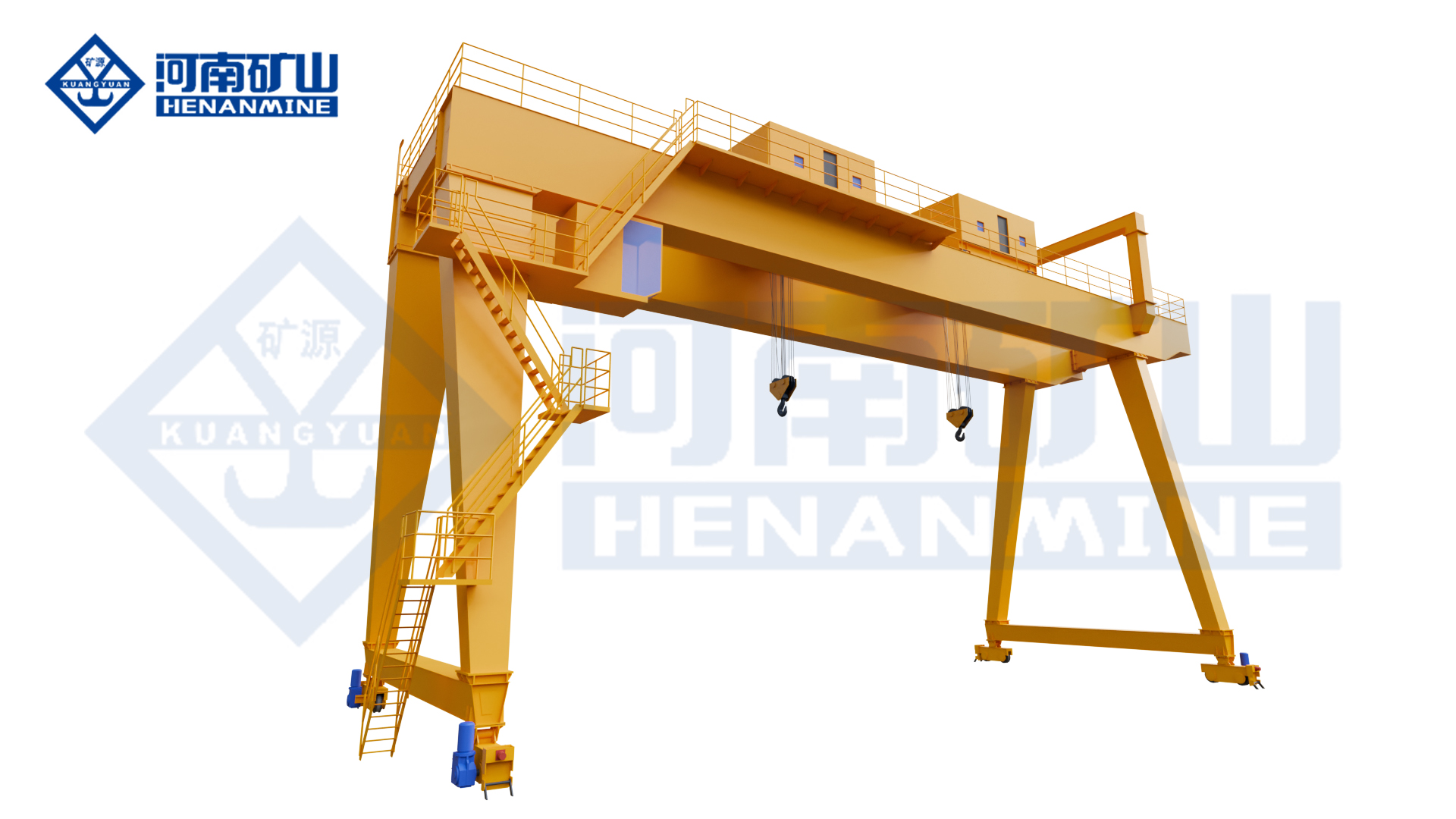
A single-girder crane uses one main bridge girder. The lifting mechanism is commonly an electric hoist traveling below or beside the girder, depending on the selected low-headroom arrangement. A double-girder crane uses two main girders and normally supports a trolley traveling on rails above the girders. The additional girder does not define quality by itself; it creates a different structural and machinery platform.
2Hoist and Trolley Arrangement
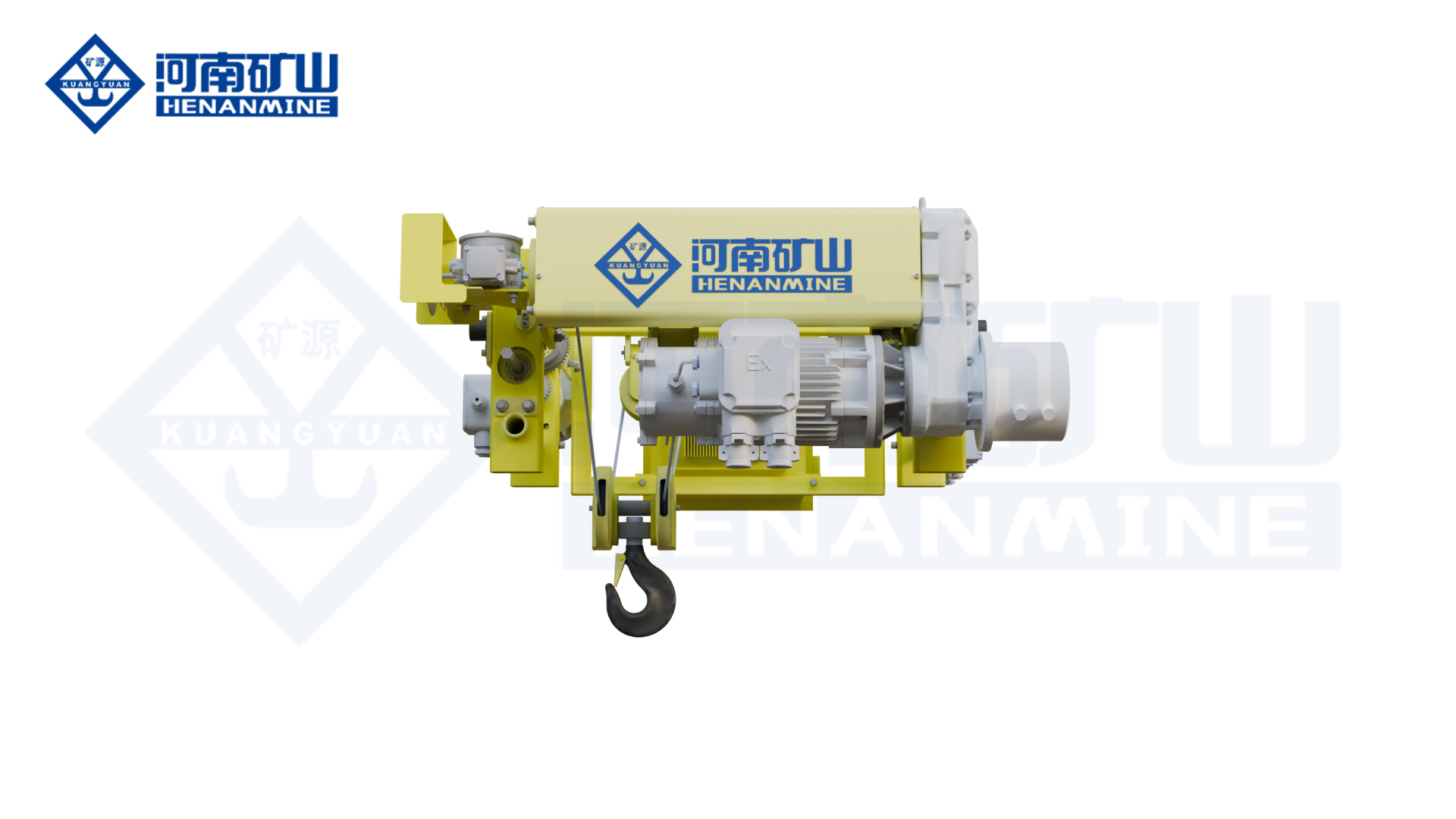
Single-girder cranes frequently use a packaged electric wire rope hoist or chain hoist. Double-girder cranes commonly use an open-winch trolley or engineered hoisting unit with more flexibility for reeving, drum arrangement, auxiliary hooks, redundant components and special attachments. Buyers should compare the actual mechanism, motor rating, brakes, reeving, controls and maintainability—not only the number of girders.
3Hook Position and Service Access
Because a double-girder trolley travels above the bridge girders, its rope path can often place the hook higher relative to the runway rail. This can increase usable lifting height in a restricted building. However, modern low-headroom single-girder designs can also perform well. The manufacturer must compare the actual crane top clearance, hook high point, hook low point and maintenance envelope for both options.
Review the new-type single-girder crane and new-type double-girder hook crane as two different configuration platforms before requesting a project-specific comparison.
2. Compare Capacity, Span, Lifting Height and Hook Coverage
Rated Capacity Must Include the Complete Lifted Load
Define the heaviest normal load, maximum exceptional load, below-the-hook device, lifting beam, magnet, grab, sling and any process fixture carried by the hook. State whether the rated capacity includes the attachment. A nominal product weight without rigging and attachments can result in an undersized crane regardless of girder configuration.
Span Changes Structural Demand
Crane span is the center-to-center distance between runway rails. As span increases, girder bending, deflection, self-weight and wheel loads become more important. A single-girder crane may remain economical within its engineered range, while a double-girder arrangement may become more practical for a long span, demanding deflection target or heavy process load. Ask both suppliers to state crane deadweight, maximum wheel loads and deflection basis with their quotation.
Lifting Height Is Not the Same as Building Height
The buyer should define the highest required hook position, lowest pickup point, load height, rigging length and safety clearance. The crane manufacturer then checks the hook path against the runway rail elevation, roof, trusses and equipment. If the required hook high point cannot be achieved by a standard single-girder hoist arrangement, compare a low-headroom single-girder crane with a double-girder top-running trolley before modifying the building.
Hook Approach Determines Usable Floor Coverage
Compare side approach, end approach and any restricted zone caused by columns, walls, process equipment or end stops. A crane with sufficient capacity can still be the wrong purchase if the hook cannot reach the loading point, machine centerline or maintenance position. Use the broader 12-parameter overhead crane selection guide to define the full geometry before quotation.
3. Match Duty, Load Spectrum and Motion Performance
Operating Hours Alone Do Not Define Crane Duty
Provide lifts per hour, operating hours per shift, shifts per day, average load, percentage of lifts near rated capacity, travel distances, starts per hour, inching or positioning frequency and expected annual use. A crane that lifts near rated capacity repeatedly can require a more demanding mechanism and structure classification than a crane operating for longer hours with mostly light loads.
Both Configurations Can Use Modern Controls
Variable-frequency drives, radio controls, anti-sway functions, positioning aids, monitoring and limit systems can be applied to single- or double-girder cranes when properly engineered. Do not select double girder merely to obtain smooth motion, and do not assume every single-girder crane has the same control quality. Compare the specified speeds, acceleration, braking, control mode and positioning tolerance.
Process Equipment Often Drives the Double-Girder Decision
Dual hooks, rotating trolleys, magnets, grabs, clamps, below-the-hook tooling, redundant drives and automated handling may be easier to engineer on a double-girder platform. Steel mills, power plants, wind-energy production and automated warehouses often need features beyond basic hook lifting. Review the steel mill overhead crane buying guide when heat, dust, duty and redundancy affect the selection.
4. Check the Building, Runway and Installation Constraints
Crane Deadweight Is Only One Part of Building Demand
A single-girder crane is generally lighter than a comparable double-girder crane, which can reduce structural demand. However, building verification must use manufacturer-supplied maximum and minimum wheel loads, transverse forces, longitudinal forces, buffer loads and applicable combinations. A double-girder crane may use a different wheelbase or wheel quantity, so total crane weight alone cannot predict the governing runway reaction.
Measure Clearances From the Real Building
Provide runway span, rail elevation, roof clearance, column haunches, lights, sprinklers, ducts, cable trays and nearby equipment. Request the crane top clearance, bridge depth, trolley envelope, hook approaches and maintenance envelope. The preferred configuration may change if the building is existing, low, narrow or unable to accept additional runway loads.
Plan Delivery and Component Replacement
Compare the largest shipping component, erection weight, site entry, mobile-crane access and assembly area. Double-girder cranes can require more field assembly, while long single girders can also create transport restrictions. Future service must be considered at the same time: technicians need safe access, and motors, brakes, wheels, drums and electrical panels need a practical removal path.
Use the crane installation planning checklist to review the building, access, power, safety and responsibility boundaries before the order is released.
5. Compare Purchase Price, Building Cost and Lifecycle Risk
Single-girder cranes normally offer lower equipment cost and lower deadweight for standard applications. Double-girder cranes normally require more steel, components and assembly, but the additional cost can be justified if it avoids a building-height increase, provides necessary process performance or reduces production risk. The commercial comparison must use equivalent specifications.
| Cost Area | What to Compare | Procurement Risk if Omitted |
|---|---|---|
| Crane equipment | Bridge, hoist/trolley, controls, electrification, access, attachments and safety options. | A low quotation may exclude essential scope or use a lower duty basis. |
| Building and runway | Runway beams, columns, foundations, rail, clearances and wheel-load effects. | The cheaper crane may require more expensive structural work. |
| Installation | Freight, unloading, erection equipment, access opening, labor, power and commissioning. | Site restrictions can erase the initial equipment-price saving. |
| Operation and energy | Motor sizing, motion profile, crane deadweight, travel distance and production hours. | Energy claims may be misleading when duty and speeds are not equivalent. |
| Maintenance | Access, inspection time, wear parts, special tools, spares and component-removal method. | Poor access increases downtime and future service cost. |
| Production risk | Criticality, redundancy, recovery plan, local support and long-lead components. | An underspecified crane can cost more through lost production than through purchase price. |
Commercial Decision Rule
If both configurations meet the same capacity, span, hook coverage, duty, control, safety and service requirements, the single-girder option will often provide better economic value. Choose double girder when a documented technical or lifecycle benefit exceeds its additional equipment and supporting-structure cost.
Single-Girder vs Double-Girder Overhead Crane Comparison
| Decision Factor | Single-Girder Crane | Double-Girder Crane | Buyer Must Confirm |
|---|---|---|---|
| Bridge structure | One main girder. | Two main girders. | Required structural capability and maintenance access. |
| Lifting mechanism | Normally packaged electric hoist. | Normally trolley or engineered winch platform. | Hoist duty, reeving, brakes, speeds and serviceability. |
| Capacity range | Commonly economical for light-to-moderate and many general duties. | Commonly preferred for heavier or process-critical duties. | Total lifted load and project-specific design range. |
| Long span | Possible within engineered limits. | Often more practical as structural demand increases. | Span, deflection, crane weight and wheel loads. |
| Hook height | Depends strongly on hoist and low-headroom arrangement. | Top-running trolley can often improve the hook high point. | Actual hook high/low points and building clearance. |
| Crane deadweight | Usually lower for comparable general service. | Usually higher. | Manufacturer wheel loads and building reactions. |
| Working duty | Suitable when the selected structure and hoist match the load spectrum. | Greater flexibility for demanding mechanisms and process duty. | Cycles, load spectrum, starts, speeds and criticality. |
| Special features | Good for conventional hook handling and many modern options. | More flexible for auxiliary hoists, walkways, redundancy and attachments. | Actual process and future interface requirements. |
| Maintenance | Fewer major bridge components; access depends on design. | Can incorporate walkways and broader service access. | Inspection access and component-removal route. |
| Initial cost | Normally lower when specifications are equivalent. | Normally higher but may solve critical constraints. | Equivalent scope, duty, controls, safety and installation. |
Information Required for a Reliable Single-vs-Double-Girder Recommendation
Recommended RFQ Method
Ask the manufacturer to state the recommended configuration and explain the decision against the same project data. Require a general-arrangement drawing, crane deadweight, maximum wheel loads, hook approaches, hook high/low points, duty basis, speeds, power and exclusions with the quotation. The overhead crane RFQ checklist can be used to prepare the inquiry package.
Application-Based Selection Examples
General Fabrication or Maintenance Workshop
A workshop handling machine parts, tools and assemblies at moderate frequency should normally evaluate a single-girder crane first. If the electric single-girder crane meets capacity, span, lifting height, duty and approach requirements, the additional cost and weight of double girder may not create buyer value.
Heavy Wind-Energy Manufacturing
Large nacelles, hubs and production fixtures can require high capacities, auxiliary hooks, wide spans, coordinated motions and precision control. A double-girder platform is often appropriate because the process—not the industry name—creates the requirement. Henan Mine Crane’s wind turbine manufacturing crane fleet project shows 200/50t, 100/32t and 75/20t double-girder configurations matched to different production areas.

Steel Mill or Severe Process Duty
Heat, dust, high utilization, production criticality and process attachments can make an engineered double-girder crane the appropriate choice. The configuration still must be selected from the real task. Review the 34-crane hot-rolled steel mill project to see how multiple crane specifications can be matched to different locations within one plant.
Precision Manufacturing or Automation
Precision handling does not automatically require double girder. The choice depends on load, span, hook height, positioning tolerance, redundancy, automation equipment and maintenance access. The smart aerospace overhead crane project can help buyers identify the control and interface questions that should accompany the structural choice.
Frequently Asked Questions
Is a double-girder overhead crane always stronger?
Double girder provides a structural platform commonly used for higher-capacity, longer-span or demanding-duty applications, but every crane must be engineered for its rated load and duty. A correctly selected single-girder crane is not an inferior crane within its intended operating range.
At what capacity should I change from single girder to double girder?
There is no reliable universal capacity cutoff. Span, lifting height, duty, load spectrum, hoist design, building reactions and process features can move the practical boundary. Ask for a project-specific comparison instead of selecting from tonnage alone.
Which configuration provides more lifting height?
A double-girder top-running trolley can often place the hook higher relative to the runway. A low-headroom single-girder hoist may also perform well. Compare the actual hook high point and crane top clearance on manufacturer drawings.
Does a single-girder crane always have lower wheel loads?
It is generally lighter than a comparable double-girder crane, but runway design must use actual project wheel loads and forces. Trolley position, wheelbase, number of wheels, lifted load, acceleration and crane combinations can change the governing reaction.
Can a single-girder overhead crane use variable-frequency control?
Yes. Smooth variable-frequency hoisting and travel can be specified on both configurations when the mechanism and controls are designed accordingly. Confirm the required speeds, acceleration, positioning and control mode in the RFQ.
Which crane is easier to maintain?
Single-girder cranes often have a simpler packaged-hoist arrangement. Double-girder cranes can provide better platform access for larger machinery. Maintainability depends on safe access, component arrangement, spare parts and removal routes—not girder count alone.
Can I upgrade a single-girder crane to a higher capacity later?
Do not assume future uprating is possible. The girder, hoist, end carriages, wheels, brakes, electrification, runway, columns and foundations were designed for defined loads. If future capacity is likely, state it during procurement and evaluate the lifecycle options before purchase.
What should I send to receive a firm recommendation?
Send capacity, load details, runway span, required hook positions, duty data, speeds, building drawings, runway information, power supply, environment, control needs, attachments, destination and required supply scope.
Final Recommendation for Overhead Crane Buyers
Begin with the least complex configuration that fully satisfies the lifting process. Select single girder when it meets the required capacity, span, hook geometry, duty, building loads and maintenance conditions with appropriate margin. Select double girder when it delivers a measurable benefit in structural capability, hook height, process equipment, service access, redundancy or lifecycle reliability.
For a valid commercial comparison, issue one RFQ and ask Henan Mine Crane to evaluate both configurations against the same input data. Compare general-arrangement drawings, wheel loads, hook approaches, duty basis, mechanisms, controls, safety functions, installation scope, spares and lifecycle support—not price alone.
Request a Single-vs-Double-Girder Crane Evaluation
Send your maximum load, span, hook height, operating frequency, load spectrum, speeds, building/runway drawings, environment, power supply, destination and required scope. Henan Mine Crane can prepare a project-specific configuration recommendation and quotation.